Burst Pipe Water Damage in Frazier Park, CA
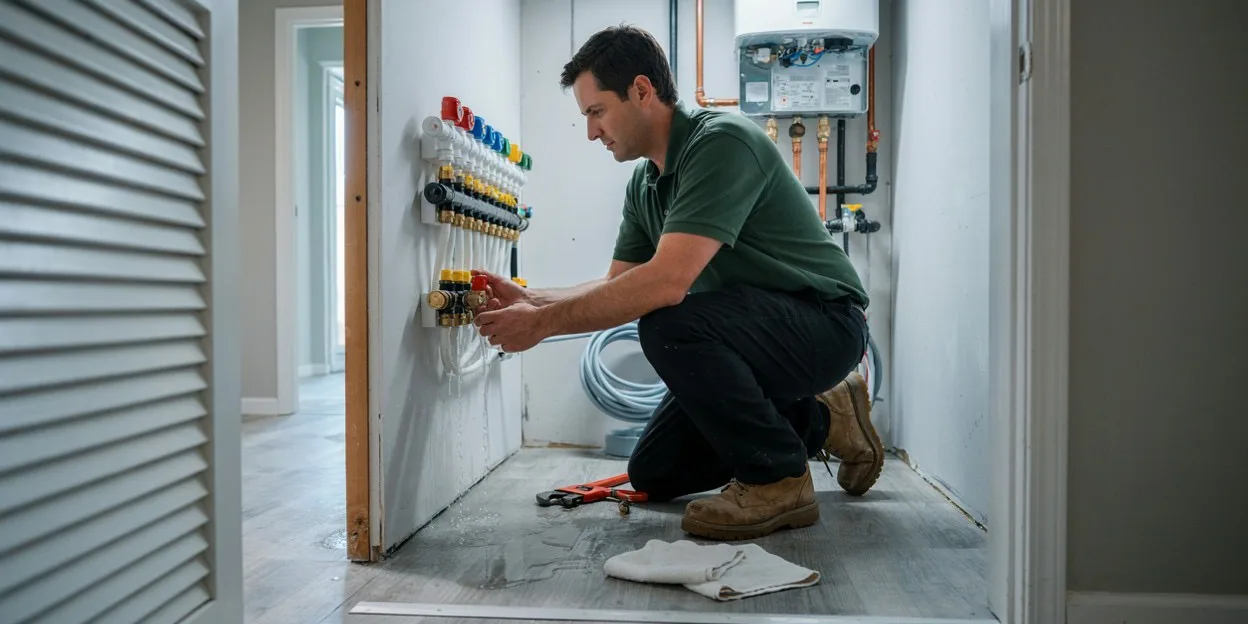
You heard it from the bedroom, a hiss that turned into a rush, and by the time you found the valve the kitchen floor was flooded and water was running down the crawl space vent outside. This site connects you by phone with an independent local provider who cleans up burst pipe water damage in Frazier Park and across southern Kern County.
What the crew does first
The crew confirms the water is off and finds out where the line failed, because that tells them which direction the water went. A burst supply line in a wall soaks the cavity and the sill plate before it shows on the floor. A failed washer hose or an angle stop under a sink floods across the floor first. Then they pump and vacuum the standing water and start metering.
They check the rooms on either side of the leak, the floor along the path, and the crawl space or the room below if there is one. The map of readings decides where the drying equipment goes and which materials come out. Nothing gets cut until the meter says it is wet.
What to do in the next hour
Shut the house valve, or the well pump breaker if the home is on a well. If you cannot find the valve, the water district can shut off at the meter. Turn off the breaker to any room where water reached an outlet, and stay out of that room.
Open cabinet doors and move anything you can lift off the wet floor. Put a bucket under anything still dripping. Take photos before you move furniture or pull up a rug. Then make the call. A plumber replaces the pipe. The cleanup crew handles the wet building, and the two often overlap on the same day.
What is usually saved and what is not
Tile, sealed concrete, and framing usually dry in place. Carpet pad, particleboard cabinet bottoms, laminate flooring, and drywall that stood in water usually come out. Solid wood flooring is a maybe, and it depends on how many hours the water sat and whether the crew can get mats on it before it cups.
Ask the crew what reading supports each removal, and ask how they plan to dry what stays. If the pipe let go because it froze first, the timeline is longer than it looks and frozen pipe cleanup covers that. The drying that follows extraction is structural drying, and it is where most of the days on the job go.
Kern County notes
Pipes fail for different reasons on the mountain and in the valley. In Frazier Park, Lebec, and Pine Mountain Club, the usual cause is age plus cold. Galvanized pipe from the 1950s rusts through. Copper that has frozen and thawed a few winters pinholes. Plastic supply lines to toilets and washers get brittle in an unheated house and split at the fitting. Water pressure is another factor. Homes near the tanks on district systems can see high pressure, and a worn regulator lets a line take more than it was made for.
In the valley towns, the story is heat and slab. Copper under a 1960s slab in Arvin or Wasco pinholes where it touches soil. Water heaters and washer hoses in a garage that hits 110 degrees in August fail early. Either way, a burst line on a slab spreads flat across the house, while on a raised mountain floor it drops into the crawl space and needs crawl space water extraction.
Many policies cover the sudden damage from a burst line, though not always the pipe itself. Ask the crew to photograph the failed section before the plumber takes it away, and to record the first-day readings. A rebuild that replaces drywall or plumbing in the unincorporated mountain communities goes through Kern County Public Works, and the cities in the valley have their own permit desks.
Calling about burst pipe water damage
Have the address ready and say where the pipe failed, whether the water is off, which rooms are wet, and whether the water reached a crawl space or a lower floor. Say whether a plumber is already on the way. Call (661) 605-4547.